
Criminal Court Records in Coal County
A criminal court record is the full case file the Court Clerk opens once charges reach the District Court. In Coal County that office is held by Court Clerk LaDonna Flowers at 4 N. Main in Coalgate, and it records and keeps the criminal division alongside civil, probate, juvenile, and domestic proceedings. The file gathers every paper filed in the case, from the charging document through the final order, and the docket lists each event in date order. It is the official local record of what the court did, separate from any police or jail paperwork.
The Coal County District Court is the trial court that hears criminal matters. Felony cases carry a CF prefix and misdemeanors carry CM, with related categories for probable cause filings, search warrants, wildlife, and youthful offender cases. Charges are brought by the District Attorney for District 19, which covers Atoka, Bryan, and Coal counties under District Attorney Tim R. Webster. The prosecutor decides the counts and files them, while the Court Clerk keeps the record and the judge decides the case. Criminal appeals from the District Court go to the Oklahoma Court of Criminal Appeals.
The District Attorney District 19 office sits inside the same Coalgate courthouse complex as the court. Its statewide profile is published through the Oklahoma District Attorneys Council at the District 19 page, which confirms the three-county prosecution area.
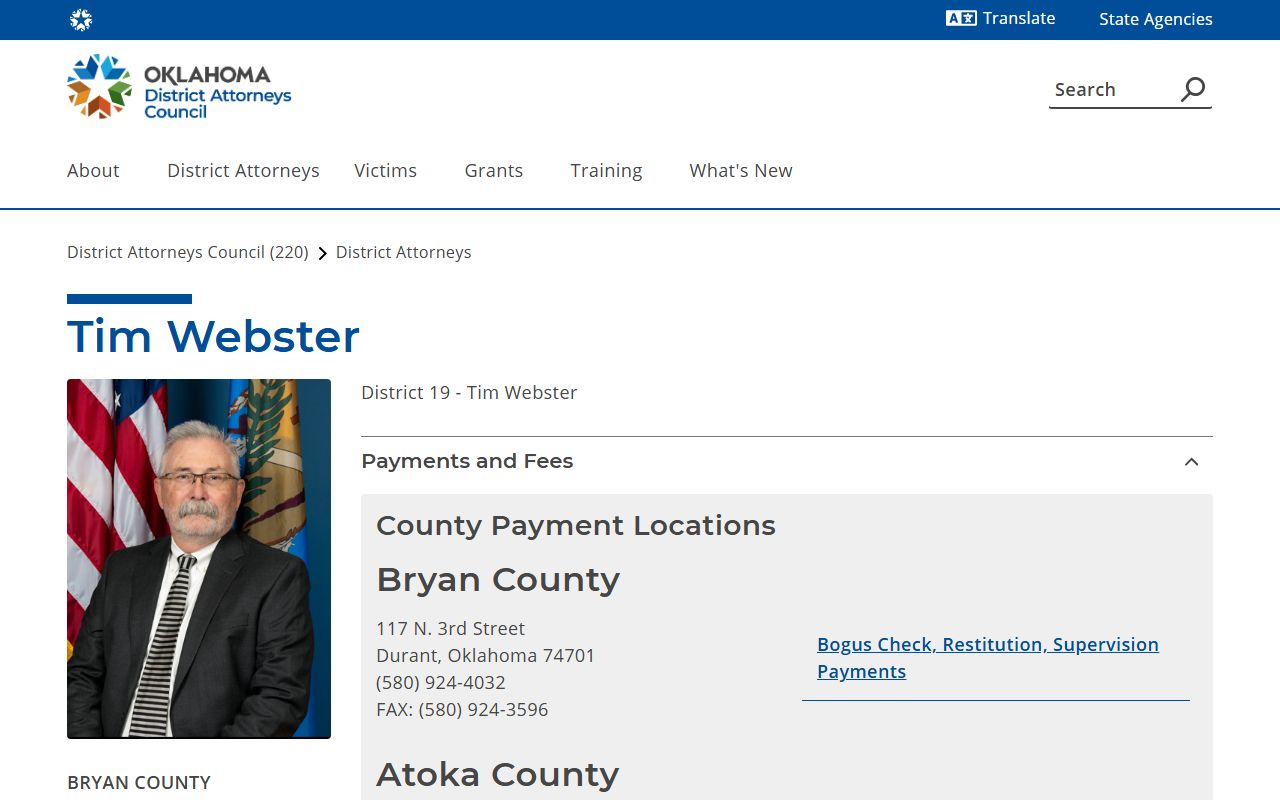
That office files and prosecutes the charges that become the heart of every Coal County criminal court record, which is why the case file and the prosecution run hand in hand.
How to Search Coal County Criminal Court Records
Two statewide systems carry Coal County District Court cases online. The On Demand Court Records portal at odcr.com lists Coal as a participating court, and the Oklahoma State Courts Network at oscn.net runs docket search across the state judiciary. Both let a reader search by defendant name or case number and filter down to criminal case types. The Court Clerk remains the fallback for older, sealed, or non-digitized files.
- Open the OSCN docket search or the ODCR search and select Coal County District Court.
- Search by defendant last and first name, or enter a case number such as CF-2014-1 if it is known.
- Narrow the results using the District Court case type filter for Criminal Felony or Criminal Misdemeanor, plus filed or closed date ranges.
- Open the case to read the docket, the charges, and the disposition recorded for each count.
- Request a certified copy from the Court Clerk at 580-927-2281 when an official document is needed for legal use.
Online dockets are convenient but incomplete, and public access can be interrupted by a verification screen or a temporary restriction. For a statewide criminal history rather than a single case, the Oklahoma State Bureau of Investigation runs a separate name-based and fingerprint-based search described further down the page.
Stages of a Coal County Criminal Case
A criminal case leaves a trail at every step, and each stage adds entries to the docket. Knowing the order helps a reader place a single docket line inside the larger case. The flow below shows where the record grows from the first filing to the last order.
Case flow: Charges Filed › Arraignment › Pretrial / Motions › Plea or Trial › Disposition › Sentencing
- Arraignment
- The defendant is brought before the court, the charges are read, an initial plea is entered, and bond terms are set or confirmed.
- Pretrial and Motions
- Both sides file motions, exchange discovery, and argue legal questions. Continuances, hearing dates, and orders all appear on the docket here.
- Plea or Trial
- Most cases end in a negotiated plea, while others go to trial before a judge or jury. The record notes the plea entered or the verdict returned.
- Sentencing
- After a guilty plea or conviction the court imposes the sentence, which can include jail or prison time, probation, fines, court costs, and restitution.
What a Coal County Criminal Court Record Shows
The criminal case file is organized around a set of standard fields that repeat from case to case. Reading them in order gives a clear picture of who was charged, with what, and how the case ended. The table walks through the fields most often visible in a Coal County District Court result.
| Field | What It Shows |
|---|---|
| Case Number | The Oklahoma prefix, year, and sequence, such as CF for felony or CM for misdemeanor, identifying the file. |
| Defendant | The accused party, along with attorneys, the District Attorney, and any bondsman tied to the case. |
| Charges | Each count by offense name and statute, the offense date, and the arresting agency that brought the matter. |
| Plea | The defendant's answer to each count, such as guilty, not guilty, or no contest. |
| Disposition | The current or final outcome of each charge, including dismissals, deferrals, convictions, or acquittals. |
| Sentence | Any punishment imposed, with jail or prison terms, probation, fines, court costs, and restitution. |
Financial entries, hearing dates, and a running docket of filings round out the file. Some documents are viewable online, but full certified copies still come from the Court Clerk.
Reading Dispositions and Sentences
The disposition is the line most readers care about, because it states how a charge actually ended. A case can hold different dispositions for different counts, so each charge should be read on its own. Common disposition terms in an Oklahoma file include the following.
- Guilty: a plea or verdict that results in a conviction on the count.
- Not guilty: a plea entered early, or a verdict of acquittal at trial.
- Dismissed: the charge was dropped by the court or the prosecutor.
- Nolo contendere: a no-contest plea treated as a conviction for sentencing.
- Deferred: a deferred sentence that can lead to dismissal if conditions are met.
A deferred sentence is not the same as an acquittal. It changes the disposition that shows in the record, but it does not by itself erase the underlying arrest. The sentence portion of the file then sets out the term, the supervision, and the money owed.
Charges vs. Convictions
Being charged is not the same as being convicted, and a criminal court record can show charges that were dropped, dismissed, or ended in acquittal. A charge is only an accusation, while a conviction is the court's finding after a plea or trial. The comparison below separates the two.
| Charge | Conviction | |
|---|---|---|
| Stage | Accusation | Verdict or plea |
| Burden of Proof | Probable cause | Beyond reasonable doubt |
| Public Record | Yes | Yes |
For a closer look at how charges are filed and how their status changes, the Coal County arrest records and court charges page tracks the charging side in detail.
OSBI Criminal History vs. the Court File
A single District Court case file is not the same as a statewide criminal history. The Oklahoma State Bureau of Investigation keeps the repository that rolls arrests and dispositions from across the state into one record. A Coal County case file shows one prosecution in depth, while an OSBI report shows a person's reported history statewide. Employers, licensing boards, and individuals often need the OSBI product rather than a single docket.
OSBI publishes its request steps and fees on the criminal history request page, which sets the cost under 74 O.S. 150.9.
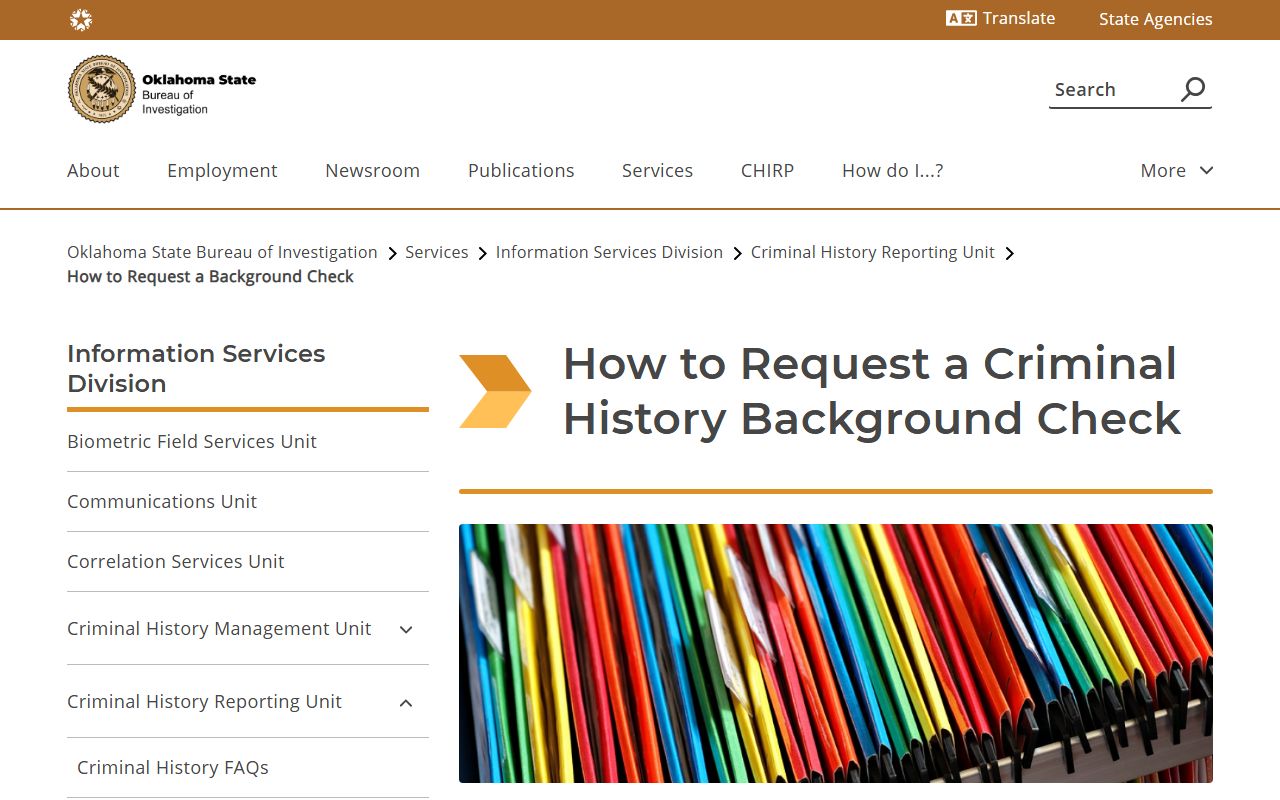
That page lists a name-based Oklahoma criminal history search at $15 and a fingerprint-based search at $19, which is the statewide complement to the local Coal County criminal court records held by the Court Clerk.
Sealed vs. Expunged Records
Oklahoma law treats sealed and expunged records differently, and the distinction matters for what stays visible. A sealed record is hidden from public view but still exists for limited official use, while an expungement under 22 O.S. 18 seals an entire arrest record so it is treated as if it had not happened. The table sets out the contrast.
| Sealed | Expunged | |
|---|---|---|
| Visibility | Hidden from public | Treated as never existed |
| Law Enforcement | Limited access | Very limited |
| Eligibility | Juvenile, confidential, or court-ordered files | Qualifying arrests and cases under 22 O.S. 18 and 19 |
The process usually starts by deciding whether a record qualifies for a Section 18 expungement or whether the issue is only a deferred-sentence update under 991(c). A 991(c) update changes the disposition but does not erase the arrest record, a point the OSBI stresses on its criminal history record expungement page.
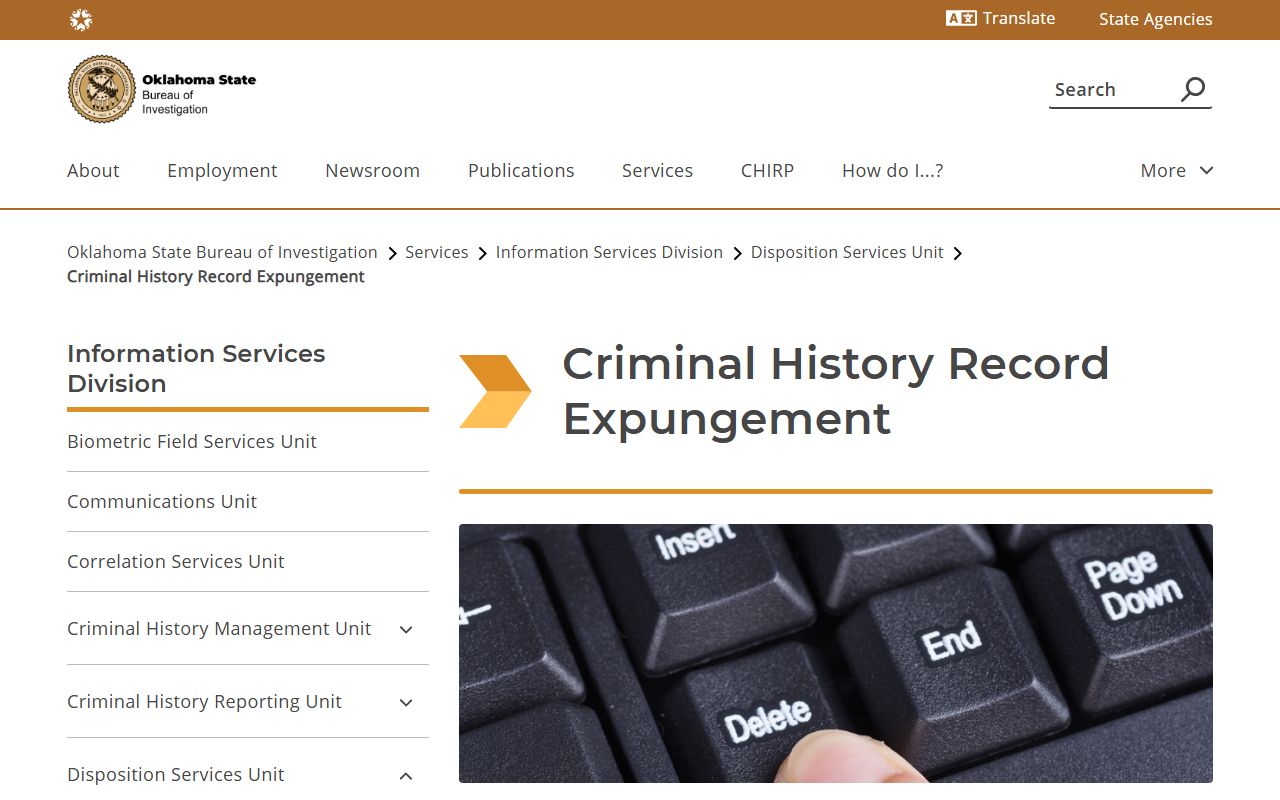
OSBI states that expunging the court record is free, while expunging the arrest record carries a $150 processing fee paid by cashier's check or money order, since personal checks are not accepted. A petitioner files in the court where the case belongs, obtains an order if eligible, and then sends the required materials to OSBI for repository processing.
Public Access to Criminal Court Records
Criminal case files are open to the public because Oklahoma treats court and law-enforcement records as public unless a law makes them confidential. The framework comes from the Oklahoma Open Records Act, supported by court rules that govern personal identifiers in filings. The expungement statute behind sealed records is published in the state code.
The full text of the expungement statute is available through the Oklahoma statutes reference, which sets out who may seal a record and under what conditions.
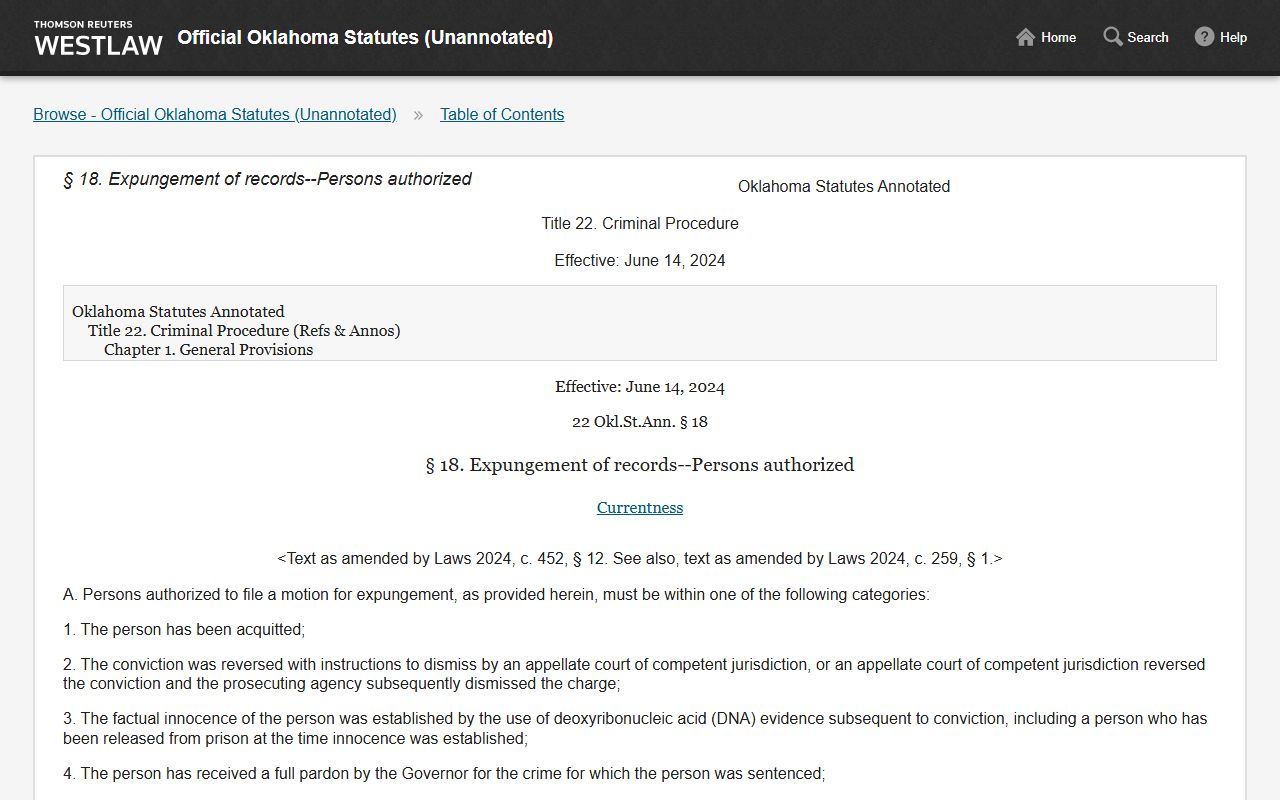
Reading the statute alongside the Open Records Act shows why most Coal County criminal court records stay public while a narrow set of sealed and juvenile files do not.
Key Statutes:
Oklahoma Open Records Act, 51 O.S. 24A.1 to 24A.25 - public bodies must allow inspection and copying of records unless a law makes them confidential, and 24A.8 sets law-enforcement inspection duties.
Rule 31, Rules for District Courts of Oklahoma - filers are responsible for personal identifiers, and e-filed documents may be publicly viewable unless protected.
Background Check Considerations
A casual docket lookup and a formal background check are not the same thing. Reading a Coal County case file online answers a narrow question about one prosecution. A background check used for hiring, housing, or licensing is governed by federal law and usually relies on the statewide OSBI history or a regulated screening service that verifies and dates its data.
Important: This is not a consumer reporting agency under the Fair Credit Reporting Act, and its information cannot be used for credit, employment, tenant, or insurance decisions.
Restricted Criminal Court Records in Coal County
Not every criminal matter is open to public view. Juvenile files are confidential under 10A O.S. 1-6-102, so they are not ordinary public dockets and may require party status, attorney access, or a court order. Sealed and expunged cases are removed from public results by law or court order, and search warrants tied to an active investigation can stay sealed while the matter is pending.
Personal identifiers, confidential addresses, financial account numbers, and mental-health materials may be redacted even in an open file. For the broader set of civil, probate, and family records the office keeps, the Coal County court records overview covers the other case types and how to reach them. Anything sealed, juvenile, or non-digitized is best confirmed directly with the Court Clerk during office hours.