
Coal County Arrest Records and Court Charges
An arrest record is the account of the arrest itself: who was taken into custody, which agency made the arrest, and the booking that followed. In Coal County the Sheriff operates the jail, serves warrants, and apprehends people charged with a felony or a breach of the peace. Arrest and booking detail therefore sit on the law-enforcement side, not in the court clerk's case file. The arrest record is where the story begins, but it does not by itself decide what a person is formally accused of.
The court charges after arrest are a different record. Once someone is arrested, the District Attorney reviews the matter and decides the formal counts, then files them with the Court Clerk, where they become the charge record tracked through the case. The booking side is described in more detail on the Coal County inmate records page, which covers the jail contacts and custody lookups. The complete case file, with pleas, hearings, and the final outcome, lives in the criminal court record.
The Sheriff's official duties and contact details are published on the Coal County Sheriff page, which confirms the office runs the jail and handles arrests.
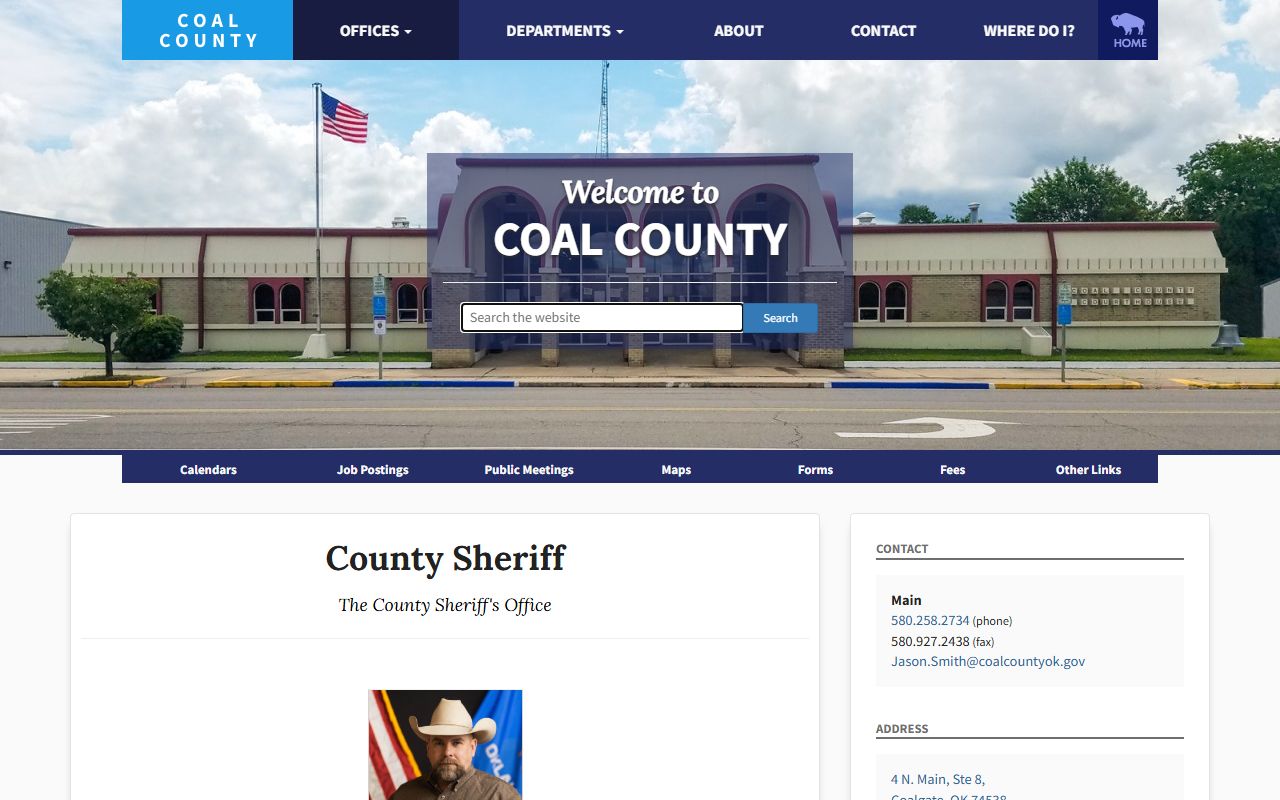
Because the Sheriff handles the arrest and booking while the District Attorney files the charges, a complete picture of Coal County arrest records means checking both the law-enforcement side and the court charge record.
How to Find Coal County Arrest Records and Charges
The charges filed after an arrest show up in the District Court case index, searchable through two statewide systems. The On Demand Court Records portal at odcr.com lists Coal as a participating court, and the Oklahoma State Courts Network at oscn.net carries District Court dockets statewide. Arrest and booking detail itself is not posted in an online roster, so that side is reached through the Sheriff's office.
- Open the ODCR search or the OSCN docket search and select Coal as the court.
- Search by defendant name in last, first order, or by a full case number if it is known.
- Open the case and read the charge list, with each count tied to an offense and a statute.
- Check each charge for its code, severity level, and current status, since counts can change as the case moves.
For a statewide rollup rather than a single case, the Oklahoma State Bureau of Investigation runs a separate name-based and fingerprint-based criminal history search covered further down. Booking records that are not posted online can be requested in writing from the Sheriff with the person's full name and booking date.
How Charges Get Filed After an Arrest
The charge record begins when a prosecutor files a charging document. In Coal County the District Attorney for District 19 brings felony and misdemeanor charges and prosecutes them in the District Court. That office is led by District Attorney Tim R. Webster and sits at 4 N. Main Street, Suite 13, in Coalgate, reachable at 580-927-2077, serving Atoka, Bryan, and Coal counties. The form the charges take depends on the seriousness of the offense and how the case reached the court.
| Complaint | Information | Indictment | |
|---|---|---|---|
| Filed By | Officer or prosecutor | Prosecutor | Grand jury |
| Common For | Misdemeanors | Many felonies | Serious felonies |
| Starts | The case | The case | The case |
The District Attorneys Council publishes the statewide roster of prosecutors and their districts on the Oklahoma District Attorneys page.
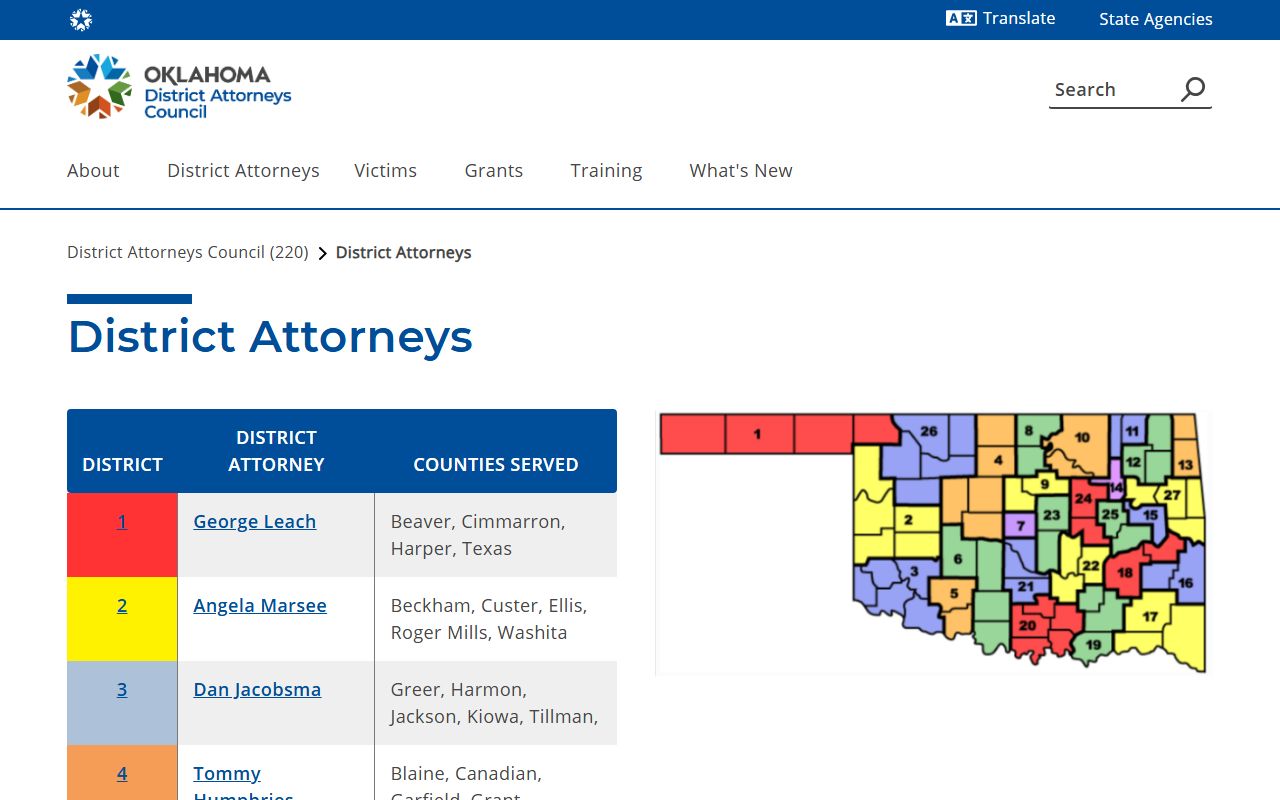
That roster confirms District 19 as the office that files the court charges following arrests across Coal County, which is why the charge record traces back to the prosecutor rather than the arresting officer.
Charge Codes and Severity Levels
Each charge is coded to a statute and carries a severity level. Oklahoma sorts criminal matters mainly into felonies and misdemeanors, with felony cases filed under a CF prefix and misdemeanors under CM in the District Court system. A felony is the more serious level and can carry prison time, while a misdemeanor carries lighter penalties. Related categories cover probable cause filings, search warrants, wildlife offenses, and youthful offender cases.
One arrest can produce several separate charges. A single incident may lead to a felony count, a misdemeanor count, and a traffic count all in the same case, each with its own code and its own possible outcome. Reading the charge list means checking the statute and level on every count rather than assuming one label covers the whole case.
Charge Status and What It Means
Charges are not fixed once they are filed. As a case moves, a count can be amended, reduced, added, dropped, or dismissed, and the docket records each change. Knowing the common status terms helps a reader tell a pending accusation from a resolved one. The table defines the terms that appear most often.
| Status | What It Means |
|---|---|
| Pending | The charge has been filed and the case is still open, with no final outcome yet. |
| Amended / Reduced | The prosecutor changed the count, often to a lesser offense, and the new charge replaces the old one. |
| Dismissed | The charge was dropped by the court or the prosecutor and is no longer being pursued. |
| Nolle Prosequi | A formal notice that the prosecutor declines to pursue the charge, ending it without a conviction. |
A dismissed or declined charge can still appear in the record even though it did not lead to a conviction. The arrest behind it also remains unless the record is later sealed or expunged.
Federal Charges and Indian Country
Not every charge in Coal County is filed by the local District Attorney. The county lies within the U.S. District Court for the Eastern District of Oklahoma, and some offenses are charged federally by the U.S. Attorney rather than the state. This matters because the federal office reports that the Eastern District is entirely Indian country, which affects which authority brings certain charges.
The U.S. Attorney's Office for the Eastern District of Oklahoma publishes its work at its official office page, separate from the county and state systems.
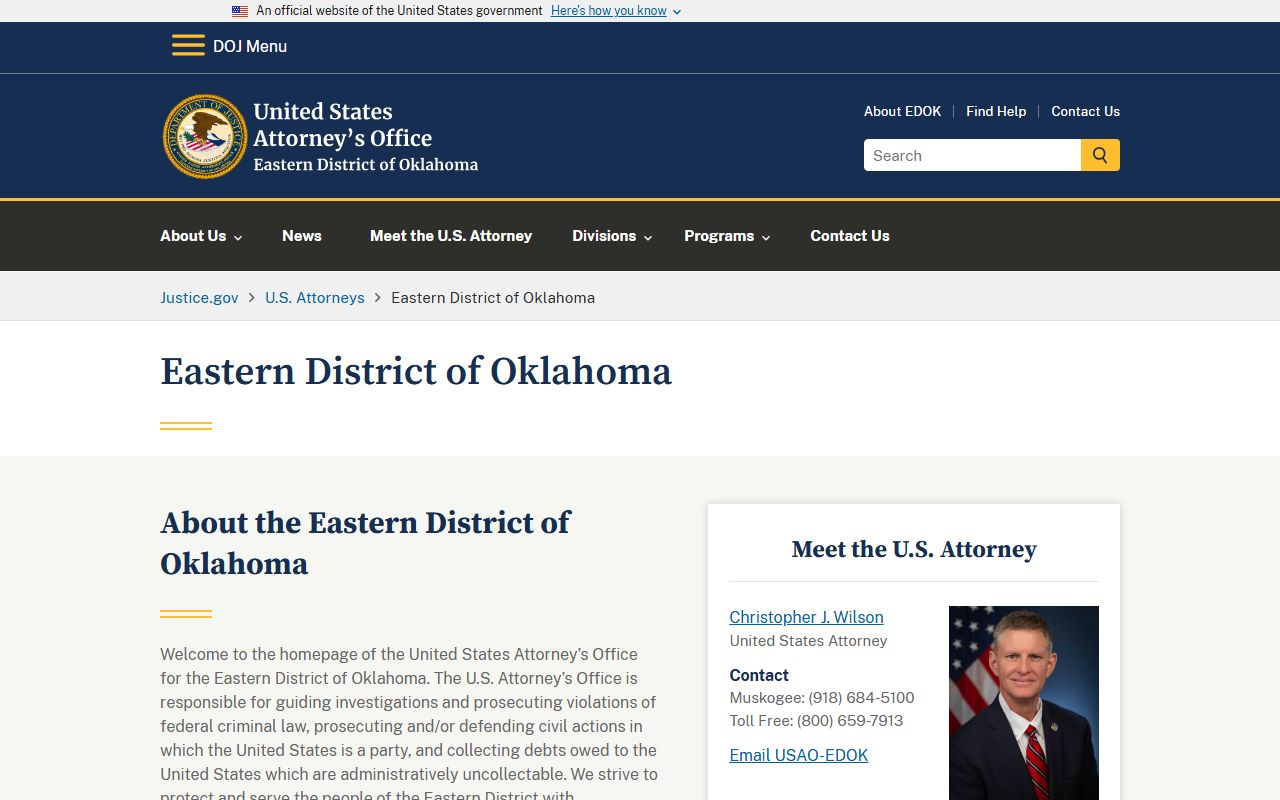
Its about page states that the Eastern District includes Coal County and is entirely Indian country, which is the source of the federal charging role.
Federal charges are filed and tracked in the federal court system, not with the Coal County Court Clerk, so a federal case will not appear in the state District Court index.
Charges vs. Convictions
Being charged is not the same as being convicted. A charge is an accusation that a case is moving forward, while a conviction is the court's finding after a plea or trial. A charge record can show counts that were later dropped, reduced, or dismissed, so the status of each count matters as much as the charge itself.
| Charge | Conviction | |
|---|---|---|
| Stage | Accusation | Verdict or plea |
| Burden of Proof | Probable cause | Beyond reasonable doubt |
| Public Record | Yes | Yes |
The full case file, with the pleas, hearings, and final sentence, is laid out on the Coal County criminal court records page, which follows a prosecution from charges through disposition.
Sealed vs. Expunged Records
Some charge records are removed from public view. Oklahoma law separates a sealed record from an expunged one, and the difference shapes what a search will return. The comparison below sets out how each affects a charge or arrest record.
- Sealed
- The record is hidden from the general public but still exists for limited official use. Juvenile, confidential, and court-ordered files fall here.
- Expunged
- Under 22 O.S. 18 and 19, a qualifying arrest record is sealed and treated as if it never happened, with even law-enforcement access tightly limited.
- Deferred Sentence Update
- A 991(c) update changes the disposition shown in the record, but it does not by itself erase the underlying arrest record.
Expunging the court record is handled free of charge, while sealing the arrest record at the state repository carries a $150 processing fee paid by cashier's check or money order. A person starts by deciding whether a record qualifies under Section 18 or whether the matter is only a deferred-sentence update.
Statewide Charge and Criminal History Lookups
A single Coal County case shows one set of charges, but a statewide criminal history pulls a person's reported arrests and dispositions together. The Oklahoma State Bureau of Investigation keeps that repository and sells a name-based and a fingerprint-based search. This is the product employers and licensing bodies usually need rather than a single docket page.
OSBI lists its request steps and fees on its background check request page, with a name-based Oklahoma criminal history search at $15 and a fingerprint-based search at $19 under 74 O.S. 150.9. The general framework that keeps court and law-enforcement records open comes from the Oklahoma Open Records Act, published in the state's open records statutes, which still allows narrow exceptions for confidential files.
Background Check Considerations
A quick charge lookup and a formal background check serve different ends. Reading a Coal County case online answers a narrow question about one matter. A background check used for hiring, housing, or licensing is governed by federal law and usually relies on the statewide OSBI history or a regulated screening service that verifies and dates its data before it is used.
Important: This is not a consumer reporting agency under the Fair Credit Reporting Act, and its information cannot be used for credit, employment, tenant, or insurance decisions.
Restricted Charge Records in Coal County
Not every charge is open to public view. Juvenile charges are confidential under 10A O.S. 1-6-102, so they are not ordinary public dockets and may require party status, attorney access, or a court order. Sealed and expunged charges are removed from public results, and charges tied to an active investigation, such as a sealed search warrant, can stay out of view while the matter is pending.
Dismissed charges sometimes carry restrictions of their own, and personal identifiers, confidential addresses, and financial account numbers may be redacted even in an open file. Anything sealed, juvenile, or not posted online is best confirmed directly with the Court Clerk during office hours, while booking and arrest detail is confirmed through the Sheriff's office.